I changed my algorithm for my trips to go up to 500 kilometers instead of 300 miles. That gets me up to 310 miles. Woodbury, New Jersey, the seat of Gloucester County, is 308 miles from Morgantown; Media, the seat of Delaware County, is 304 miles. It's 22 miles from Woodbury to Media. Both counties are on the Delaware River. Delaware County is between Philadelphia and Wilmington, Delaware, and Gloucester County is just across the river. Gloucester is scheduled for this year (July 2022 to June 2023). Delaware was scheduled for February 2020, but I was behind by two months, and by April 2020, the world was shut down by COVID-19. I left Morgantown Wednesday, March 15, and spent two nights each in New Jersey, Pennsylvania and at my sister Robin's house in Maryland.
I had mild springlike weather throughout, although it snowed in Morgantown and over the mountains the day before I left. Interstate 68 in Preston County, West Virginia and Garrett County, Maryland had been treated, leaving blindingly shiny water and chemicals on the road and snow drifts on the side of the highway. The temperature was as low as 15 F.
I stopped halfway to Woodbury in Frederick, Maryland on Route 40. I spotted a mall just west of the city, but it was mostly closed. Across the street was Mountain View Diner, which has a branch in nearby Martinsburg, West Virginia. They have an oldies theme. It was crowded with people my age, with waitresses not much younger. The kitchen help was Mexican men, judging from what I could pick up of their conversations. The woman who greeted me at the door called one of the waitresses "Mom." "Walking In The Rain, " a 1964 hit by The Ronettes, written by Barry Mann and Cynthia Weil and arranged by the late Phil Spector, was on the speaker. The greeter said "How are you?" and I said "You had me at "Walking In The Rain." She didn't understand. The wait staff was walking out with piles of bacon and French fries. I more cautiously ordered a short stack of pancakes and a cup of fresh fruit.
I drove in to Woodbury late in the afternoon and found some historic places to photograph. The County Courthouse looks like a big stone church. I checked out a thrift shop, looking for the elusive 200th compact disc for my collection of the best-selling CDS from 2000-2009. No luck.
Gloucester County Courthouse, Woodbury, New Jersey
Hunter-Lawrence-Jessup House, 1765, renovated 1888, now Gloucester County Historic Society, Woodbury
Woodbury Friends Meetinghouse, 1715
G.G. Green's Block, 1880, renovated after the 2011 Virginia earthquake, Woodbury
The Usual Chain didn't have a place in Gloucester County, so I stayed at a relatively inexpensive branch of The Other Chain in Deptford, a suburban borough along the expressway between Philadelphia and Atlantic City. I checked in and tried to nap, but I had a noisy neighbor who had family visiting, yacking in the hallway and slamming doors. I had a few minutes of shut-eye. Deptford Mall was nearby. I love malls, but most of them are dead or nearly so. This one was doing well with three department stores and a great food court. I got a heaping plate of teriyaki chicken with noodles. The mall at 6 P.M. was mobbed with mostly young people of many ethnicities and races. Most of the stores had fast-fashion for young women, athletic shoes, hats and t-shirts for young men. There was an FYE store (the Morgantown Mall store closed in the pandemic), my go-to place for CDs, but this store no longer carried them. I felt like a relic of a previous era, looking for obsolete technology and being two generations older than most people at the mall.
I had two plans for my one full day in Gloucester County: one plan was to see 10 randomly selected historic places throughout the county; the other was to find a park, a university, a synagogue and an independent book store. I mapped out all of those places and headed south. The expressway through the county heads to Atlantic City, a place with lots of memories for me, but I wasn't planning to go there.
I visited the borough (town in New Jersey) of Pitman because there is an independent book store called "Words Matter." I was looking for the Pulitzer-Prize winning novel "The Netanyahus" based on when the Israeli prime minister's family spent a year in the United States. They had Benjamin Netanyahu's autobiography, but that wasn't going to do it. I bought Jennifer Egan's latest "The Candy House."
On the map, I could see narrow streets fanning out from a central circle, so I walked down from the Main Street (Broadway, naturally) to see this neighborhood. It was started as a Methodist camp, with a barn-like meeting house in the middle. The small frame houses are on sidewalk streets fanning out from the central circle. It's human-scaled and charming.
Broadway Theater, Pitman
Pitman Grove Historic District
Auditorium in Pitman Grove, 1871, 1878 and 1911
Back in the car, I continued south to Williamstown to see the Memorial Library and Reading Room from 1878. Down the street was a theater where they were performing "A Street Car Named Desire." In younger years, I would have gone back in the evening to see it. Now I stay in after dinner.
Williamstown Free Library and Reading room, 1878
I visited Scotland Run Park near the south end of the county. There was a school group out on the picnic grounds and playground. I walked up to the lake to take a pic. The weather was sunny and pleasant, not too hot and not too cold.
Wilson Lake, Scotland Run State Park, Clayton
Driving north, I visited Glassboro and Rowan University. The university was closed for spring break, and I parked on a nearby street to take a picture of the West Jersey Railroad Station, from 1863, which used to run trains from Camden to Cape May. I walked across the street to take a picture of the main building at Rowan University, a state institution. I was gone no more than 10 minutes, and came back to find a borough worker writing a parking ticket. It turned out to be a $44.00 fine. It was lunch-time and I was going to stop somewhere in Glassboro, but decided to go back to Pitman for lunch.
West Jersey Railroad, Glassboro Station 1863

Rowan University, Glassboro
On Broadway in Pitman, I found a vegan café and ordered an Impossible Burger. There was a giant Pride flag in the window. The owner had on a Gay Pride shirt. She told me she and her husband (!!) were supporters of gay rights, and that Pitman was known as a gay-friendly town. I found a comic book store and talked to the owners, a male-female couple from New York. I was amazed by the range of stuff. It was the week that includes March 17th and 18th, the when my father and mother died, 12 years apart. My sister had posted pictures of our parents on Facebook, and the woman at the comic book store let me show her their pictures. I must have been in a mood. I told them all I needed that I hadn't found was a used CD store, and Milton, the husband, pointed me to a store on the corner that specializes in used jewelry, but has records and CDs in the basement. A vast collection, as it turned out. There was a young man there going through the albums. He picked out "Yesterday and Today" by The Beatles and "Manassas," an album by a group with that name led by Stephen Stills, from 1972, decades before he was born. We didn't talk, until I found the elusive 200th CD from the best-selling albums from 2000-2009, the self-titled album from Ashanti, and a Grammy-winner for Best Contemporary R&B album for 2002. The price: $1.00. I don't remember the student's name, but he told me he was a college student at the University of Vermont, home in New Jersey for spring break. He told me he took a high school class called "American Popular Music-George Gershwin to the Present." I wish I had gone to that high school. He said he decided the best popular music was in the 1960s. I didn't argue.
My last stop was at a shop on one of the side streets off Broadway. They had a sign out on the corner about jewelry and gifts. There was a group of women talking when I walked in, and the owner eventually looked at me and said "Can I help you?" I saw earrings and thought I would buy a pair of earrings for my sister. We found an appropriate pair. More on that later. I had spent a lot of time in Pitman, and my only regret was that Joe wasn't with me. He loves finding hip little towns where you don't expect to find them.
I found a few more places before heading back to the hotel. I visited Richardson Avenue School from 1931 in Swedesboro, and the 1772 Jesse Chew House in now-suburban Sewell, part of Mantua Township. I finally located Congregation B'nai Tikvah-Beth Israel, near Sewell. I read up on the history from articles linked to the temple website (cbti.org) and found that it was a merger of a dying synagogue in the center of Woodbury, and a faster-growing suburban synagogue in Turnersville, northwest of Sewell.
Richardson Avenue School, Swedesboro, 1931
Jesse Chew House, 1772, Sewell
B'nai Tikvah-Beth Israel, near Sewell
It was late by that time, so I headed back to the motel, napped for a bit, and went back to the mall for a later dinner, after 6:30. I had a chicken gyro with vegetables and salad at a Greek stand, and either because the young woman found me charming or because it was late, and they had to close by 8, she gave me enormous portions of everything, more than I could eat.
Friday after breakfast, I checked out and of the motel and headed across the Delaware River on the Walt Whitman Bridge, then through the south end of Philadelphia to Delaware County just to the south. I started in Chester, the largest city in the county (there are larger townships), the former county seat, and, I'm told, the poorest and most-crime-ridden city in Pennsylvania.
I started at Widener University, uphill and northwest of the center of Chester. I found Old Main at the center of campus. The weather was warm and students, mostly White in a predominantly Black city, were out on campus. Downtown, I found Third Presbyterian Church from 1872, destroyed by an arson fire in 2020, and the restored 1724 Chester Courthouse in the center of town. The William Penn Landing Historic Marker from 1882 is in a sad-looking little park; the former Delaware National Bank Building is nearby. There is a commercial downtown block, but I didn't see much open. South along the river, I found a parking lot adjacent to a soccer stadium sponsored by Subaru. From there, I had a good view of the Delaware River and Commodore Barry Bridge, named for a Revolutionary War hero from Philadelphia, and opened in 1974. I could see the 1916 Philadelphia Electric Complex, now an office building at the south end of Chester.

Old Main and Chemistry Building, Widener University, 1867and 1883, Chester
Ruins of Third Presbyterian Church, 1872, Chester
1724 Delaware County Courthouse, Chester
Former Delaware National Bank Building, 1882-1884, Chester
Site of William Penn's Landing, 1682, monument 1882, Chester
Commodore Barry Bridge over the Delaware River, opened 1974, Chester
Chester Waterside Station of Philadelphia Electric Company, now offices, 1916
It was still early, so I headed to Haverford Township, a historic area west of Philadelphia. I found Havertown Shopping Center with Cathy's Half-Price Books, my independent bookstore for this part of the trip. I didn't see anything in the used section that I wanted, and the new books were full price. I was having a burst of worrying about how much money I was spending, so I didn't buy anything. In the same shopping center is a bagel shop, where I had a bagel with cream cheese for lunch. There is also an Acme supermarket, where I bought an orange for dessert and a Cliff Bar for later, and ate the orange while sitting in my car.
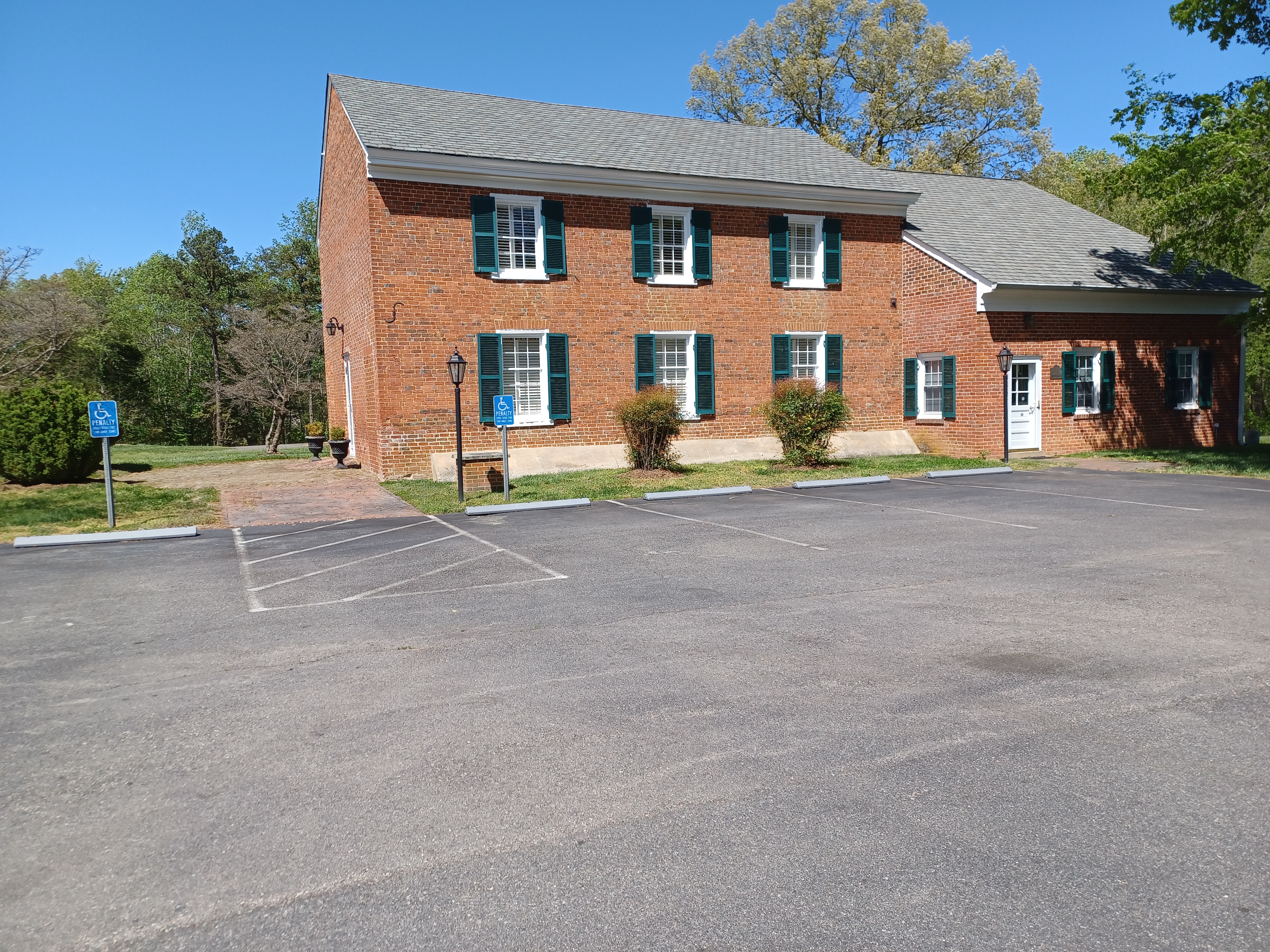
Looking for historic places, some of which were hidden or just hard to find, I discovered The Federal School, a one-room schoolhouse from 1797, the Llanerch Public School, from 1913, and Nitre Hall, the home of the owner of a long-gone powder mill, built just after 1800, and a museum today. I wandered into Upper Darby Township and found Lower Swedish Cabin, possibly dating to the 1640s. I ended at Merion Golf Club, where the courses, from 1912 and 1914, are listed on the National Register of Historic Places. It was raining, so no one was out.
Llanerch Public School, Haverford Township, 1931
Lower Swedish Cabin, Upper Darby Township, 1640s
Nitre Hall, just after 1800, Haverford Township
Merion Golf Club, Haverford Township
Former Federal School, Haverford Township, 1797
My friend Mark Silber contacted me. He was someone I knew in Miami, and we had lost track of each other years ago, but thanks to the magic of Facebook, we reconnected. He has a restored late Victorian house in West Philadelphia, near the University of Pennsylvania, and agreed to meet me at my hotel for dinner.
The hotel is unusual for "The Usual Chain" because it is about seven stories tall, near the Delaware River south of the city and the airport. It looks somewhat Vegas-like, with fake pilasters by the elevator doors, and balconies in each room, which the hotel asks guests not to open. There is a restaurant, but there's no free breakfast. It's also an event center. Mark called me, but I had turned down the volume on the phone, and didn't hear it. He arrived at the hotel and had the desk clerk call the room. We had a pleasant dinner at the hotel. I was glad to see him and catch up.
with Mark Silber, Essington, Tinicum Township
Since it was Friday night, I looked for a synagogue to attend nearby. All I could find was a Reconstructionist synagogue near Media, the county seat, and they were having an online-only service. I decided I would rather tune in to Joe's service from Morgantown, so that's what I did.
Saturday morning, I walked a mile to a WAWA store, where I bought oatmeal and some fruit to take back to my room. It was cool, not cold, in the morning and the store was packed with people who looked like they were going to a job. After breakfast, I drove to Media, the county seat, where the parking meters were either for ten mutes or an hour and a half. I took the ten-minute option, and snapped a picture of the Media Armory, now a Trader Joe's store. Off the Main Street, full of trendy stores and little cafés, I found a historic house, now a B&B, and the county courthouse.
I headed south where there is a synagogue in a remodeled barn, next to a vineyard, across the main road from a development of upscale houses. It was after twelve, so I thought no one would be there, but there had been a meeting, so I first met a member who was security, things being how they are these days, then I met the woman who runs the facilities, the congregation president, and finally, the rabbi, with whom I have a common friend.
It was past lunch time. I had passed a Panera on the way, and thought I would go there, but instead I pulled into a diner, that was crowded with people in my age group. I ordered a chicken parmigiana sandwich, and upgraded to sweet potato fries from regular fries. It was way too much food, but I somehow managed to eat all but the last few fries. I noted that all the staff looked alike, dark features, and with an accent I took to be Greek. I said "efaristo," meaning "thank you" in Greek when I paid the bill, but the cashier just said "That's okay." "I thought you all are Greek," I said. "Turkish," he replied. That was an "oops!" moment. Outside, someone had parked a new-looking 1957 Chevrolet station wagon. I couldn't find my keys, so I went back in, where they were on the table. I found the owner of the car and thanked him for making my day happy with his car.
It was not warm out, but sunny, so I drove to Ridley Creek State Park. I parked and walked a path through the park, which was crowded with people and their dogs. I found a historic bridge, and the visitor center, in a mansion mid-park, unfortunately closed for a private event.
Media Armory, 1908
Risley House, 1877, now a bed and breakfast, Media
Delaware County Courthouse, Media
Congregation Beth Israel of Media
1957 Chevrolet Bel Air station wagon
Historic bridge in Ridley Creek State Park
Mansion in Ridley Creek State Park, about 1918, now the Visitor Center and an event center
I needed an Apple Store, or at least I thought I did, because I tripped over the computer cord in the hotel and broke the cord. There is a store in Ardmore, a community that can be in Delaware or Montgomery County or the city of Philadelphia. It's confusing. I went there the way with fewest turns and entered Philadelphia and moved into Montgomery County. The store was in what looked like an office complex turned into upscale retail, mobbed with upscale-looking people, including lots of young people, at stores and restaurants. The Apple store was crowded with people looking at the latest doo-dads, but I found someone to help me, and for $20, I scored a new wire. I could have used the cord from my phone, or bought something cheaper, but I found the area interesting.
I headed back to the hotel, which was hosting an event, meaning I had to park from the door. I crashed for more than an hour.
For dinner, I went out to a supermarket I found on Google Maps, bought a bagel, single servings of Cheerios and cottage cheese and a pear and ate back at the room.
I was heading to my sister's home in Greenbelt, Maryland, outside Washington, so I thought I would get a fast breakfast at the hotel restaurant. After waiting twenty minutes, during which time I got a cup of tea, but no one had taken my order, I offered to pay for the tea. The cashier asked me about canceling my order. When I told her I hadn't ordered she said I didn't have to pay for the tea. The few would-be diners in the place were also frustrated at how horrible the service was.
I wasn't all that hungry, so I packed up and left. I bought oatmeal at the rest stop in Delaware, and continued on my trip. Google directions had me go through Baltimore's Harbor Tunnel to the Baltimore-Washington Parkway, but I decided to go straight through on I-95 from near the hotel, to near my sister's house. It was easy, except for my body freaking and needing to pee every twenty minutes. I'll spare readers the details.
My sister was delighted with the earrings from the store in Pitman, New Jersey. We visited the National Arboretum Monday to see some trees in bloom and even a palm tree! We lunched at Silver Diner in Greenbelt, one of my favorite places.
My sister Robin, modeling the earrings I bought in Pitman, New Jersey, at the National Arboretum in Washington, D.C.
I had an uneventful trip home Tuesday, stopping for lunch and gas at a Sheetz store outside Cumberland.
There are 96 places on the National Register of Historic Places in Delaware County. I barely touched the surface. This was a longer trip than most of the ones I do. I love being in the Philadelphia area. People are friendly, the population is diverse and there's good scenery and a variety of places. Much of the area is like the suburbs of Baltimore, not that far away. The difference is how many places are left from the 18th and 19th century.