Thursday, May 4, 2023

Goochland and Grayson Counties, Virginia, Part One: Goochland

 In my continuing efforts to catch up with my goal of visiting one county per month within 500 kilometers of Morgantown in any state, I visited two counties in April, both in Virginia. Goochland is just upstream from Richmond along the James River; Grayson is in the mountains near the borders of North Carolina and Tennessee. I had great, too-warm- for-April weather all week, Monday to Friday.

I drove to Goochland on my favorite, shorter-but-takes-longer route, U.S. 119 through Grafton, West Virginia onto U.S. 250 and over the covered bridge to Philippi, then to Elkins and over the mountains to Staunton, Virginia, then onto Interstate 64 to U.S. 522. I found the Goochland's Old Courthouse, with the obligatory Confederate statue on the front lawn. It was already after 4 P.M., so I left town to go to the motel, "Usual Chain" in Short Pump, a section of Henrico County, north of Richmond. On the way in, I spotted a branch of Silver Diner, the diner I visit often with my sister in Maryland. I walked there from the motel. The neighborhood of the hotel is lushly landscaped, with mostly office buildings and hotels. Mine was luxurious (and not as cheap as usual) but not crowded.

                                                       Goochland County Courthouse, 1826

Tuesday morning was my day to visit Goochland County. I decided to go east to west, visiting ten historic places that were accessible from a public road. Many of the historic places are 17th and 18th century estates down long driveways with fences and "No Trespassing" signs. I had discovered that I didn't have enough furosemide tablets. I usually take one every day so that water doesn't stay in my legs because of my weak heart's inability to pump it out. I decided this would be the day not to take one. It was a great relief, actually, because I could control when I needed to go.

My first stop was at Tuckahoe Plantation on the James River, in Manakin, built early in the seventeenth century. Thomas Jefferson spent part of his childhood there. The grounds are open to the public for a voluntary five dollar fee. It was a beautiful day, cool in the morning, then warmer in the afternoon. This was the best week in April to travel.There are several houses on the grounds, including former slave houses. To add to the scenery, there was a boy of about four with two dogs on the grounds. He was throwing a ball for the dogs to catch and retrieve. The dogs came up to me and I greeted them. They sniffed my hand, then went back to the boy. 

                                                             Tuckahoe Plantation, Manakin
                             Former slave quarters, occupied now by one family instead of two
                                                        Boy and dogs at a storehouse

                                                            One of several gardens at Tuckahoe

I found Wells Tavern on River Road, in the same community, built as a frame building in 1770, then bricked in 1820. Although the road follows the James River, there is no access to it. It is lined with mansions and modern upscale suburban developments on dead-end streets. 

                                                                       Wells Tavern

Oak Grove is a mid-nineteenth century estate with later additions near the community of Manakin-Sabot. I caught a glimpse of the main house at Rochambeau Farm in the same community, from about 1855.

                                                                       Oak Grove
                                                                    Rochambeau Farm

I visited Crozier, where I found the First Union School, a Rosenwald School, one of many in The South built by that family to educate Black children in segregated communities. According to Wikipedia, it closed in 1958, when the county integrated its schools, and became a residence in 1985. Tanglewood is near Maidens, just east of Goochland Courthouse . The front was built as a gas station in 1929, and the main part of the building added as a hotel in 1935. It is now a restaurant.


                                                              Former Rosenwald School
                                                                     Tanglewood

I headed to Goochland, sometimes called Goochland Court House in the Virginia style of naming the small community near a county courthouse the name of the county and "Courthouse." I ran into the tourist lady outside her office, which was closed. She told me she had come in to get some work done, but we talked for a few minutes. She said that the people along River Road will never say they live in Goochland County, they'll say they live in Richmond. I could feel her annoyance. She said "real" Goochland people are different. I guess she meant that Goochlan people aren't rich suburbanites, but more rural in their ways and outlook. There is a small shopping area near the courthouse square. I decided to go local and eat at Goochland Restaurant. Most items on the menu had bacon in them or were deep-fried, but there was a grilled chicken and vegetables plate that sounded healthy, so I ordered that. The waitress was surprised that I didn't want some ranch, bleu cheese or honey mustard dressing on my meal. 


                                                                Goochland Restaurant
                                                                     Sign in the restaurant

After lunch, I visited the beautiful county library (why isn't Morgantown's library beautiful?). I met a woman who had recently moved from Chicago to Goochland. She was turning in a novel by Emily St. John Mandel, which she said she didn't like, and complained that the library had no book clubs. I saw that they had a copy of Jeffrey Eugenides' Middlesex in the library sale section, and suggested she read that. She bought it. I got Hammond's Atlas of the 20th Century from the book sale. I found the Goochland Campus of Reynolds Community College. The tourist person told me they mostly teach gardening and landscaping. The Jackson Blacksmith Shop is a wooden shed built in 1932. Wikipedia says it is still in use, but I have my doubts. Nearby Byrd Presbyterian Church dates from 1838. A cousin pointed out to me that buildings like this look like houses in suburban Baltimore. Of course, the 20th century houses use buildings like this as models.


Goochland Library

                                             Goochland Campus, Reynolds Community College


Jackson Blacksmith Shop
Byrd Presbyterian Church

I ended at the Cartersville Bridge over James River, leading into Cumberland County, which I visited a few years ago. Cartersville is in Cumberland County. The original bridge was built on stone piers in 1822, with the superstructure of timber and cast iron is from 1883-84. There are only pieces of the bridge left. It's been replaced by a boring modern bridge. This was the only place I could find with a view of the James River.

                                       Ruins of the old Cartersville Bridge on the James River

I headed back to the hotel, a half-hour drive to and then on I-64. After a nap, I looked for a place to have dinner and found there is a Golden Corral buffet near the hotel. Although I knew where it was, I had difficulty finding it. The neighborhood, on Broad Street, way west of Richmond, reminds me of Kendall, the neighborhood I lived in in Miami from 1979-1984, full of garden apartments, shopping centers and office buildings far from the central city. I made up for my Spartan lunch.

After eating, I headed to Short Pump Town Center, the big mall I had found on the map. It's outdoors, a little like The Grove in Los Angeles, only bigger and better. There are fountains and places to sit in open courtyards. The weather all five days I was away was  warm and pretty. I went into Macy's (we don't have one in North Central West Virginia), but I noticed that only the registers were staffed; there were no workers on the floor to help a customer look for things. I'm not interested in spending a lot of money in stores with no help, although I saw some clothes I could wear. I came back to the room and plotted out Grayson County for the second part of the trip. 

                                                         I'm at Short Pump Town Center


Sunday, April 16, 2023

Gloucester County, New Jersey and Delaware County, Pennsylvania

 I changed my algorithm for my trips to go up to 500 kilometers instead of 300 miles. That gets me up to 310 miles. Woodbury, New Jersey, the seat of Gloucester County, is 308 miles from Morgantown; Media, the seat of Delaware County, is 304 miles. It's 22 miles from Woodbury to Media. Both counties are on the Delaware River. Delaware County is between Philadelphia and Wilmington, Delaware, and Gloucester County is just across the river. Gloucester is scheduled for this year (July 2022 to June 2023). Delaware was scheduled for February 2020, but I was behind by two months, and by April 2020, the world was shut down by COVID-19. I left Morgantown Wednesday, March 15, and spent two nights each in New Jersey, Pennsylvania and at my sister Robin's house in Maryland. 

I had mild springlike weather throughout, although it snowed in Morgantown and over the mountains the day before I left. Interstate 68 in Preston County, West Virginia and Garrett County, Maryland had been treated, leaving blindingly shiny water and chemicals on the road and snow drifts on the side of the highway. The temperature was as low as 15 F.

I stopped halfway to Woodbury in Frederick, Maryland on Route 40. I spotted a mall just west of the city, but it was mostly closed. Across the street was Mountain View Diner, which has a branch in nearby Martinsburg, West Virginia. They have an oldies theme. It was crowded with people my age, with waitresses not much younger. The kitchen help was Mexican men, judging from what I could pick up of their conversations. The woman who greeted me at the door called one of the waitresses "Mom." "Walking In The Rain, " a 1964 hit by The Ronettes, written by Barry Mann and Cynthia Weil and arranged by the late Phil Spector, was on the speaker. The greeter said "How are you?" and I said "You had me at "Walking In The Rain." She didn't understand. The wait staff was walking out with piles of bacon and French fries. I more cautiously ordered a short stack of pancakes and a cup of fresh fruit. 

I drove in to Woodbury late in the afternoon and found some historic places to photograph. The County Courthouse looks like a big stone church. I checked out a thrift shop, looking for the elusive 200th compact disc for my collection of the best-selling CDS from 2000-2009. No luck.

                                   Gloucester County Courthouse, Woodbury, New Jersey


             Hunter-Lawrence-Jessup House, 1765, renovated 1888, now Gloucester County Historic Society,               Woodbury
                                                 Woodbury Friends Meetinghouse, 1715
                   G.G. Green's Block, 1880, renovated after the 2011 Virginia earthquake, Woodbury

The Usual Chain didn't have a place in Gloucester County, so I stayed at a relatively inexpensive branch of The Other Chain in Deptford, a suburban borough along the expressway between Philadelphia and Atlantic City. I checked in and tried to nap, but I had a noisy neighbor who had family visiting, yacking in the hallway and slamming doors. I had a few minutes of shut-eye. Deptford Mall was nearby. I love malls, but most of them are dead or nearly so. This one was doing well with three department stores and a great food court. I got a heaping plate of teriyaki chicken with noodles. The mall at 6 P.M. was mobbed with mostly young people of many ethnicities and races. Most of the stores had fast-fashion for young women, athletic  shoes, hats and t-shirts for young men. There was an FYE store (the Morgantown Mall store closed in the pandemic), my go-to place for CDs, but this store no longer carried them. I felt like a relic of a previous era, looking for obsolete technology and being two generations older than most people at the mall.

I had two plans for my one full day in Gloucester County: one plan was to see 10 randomly selected historic places throughout the county; the other was to find a park, a university, a synagogue and an independent book store. I mapped out all of those places and headed south. The expressway through the county heads to Atlantic City, a place with lots of memories for me, but I wasn't planning to go there. 

I visited the borough (town in New Jersey) of Pitman because there is an independent book store called "Words Matter." I was looking for the Pulitzer-Prize winning novel "The Netanyahus" based on when the Israeli prime minister's family spent a year in the United States. They had Benjamin Netanyahu's autobiography, but that wasn't going to do it. I bought Jennifer Egan's latest "The Candy House."

On the map, I could see narrow streets fanning out from a central circle, so I walked down from the Main Street (Broadway, naturally) to see this neighborhood. It was started as a Methodist camp, with a barn-like meeting house in the middle. The small frame houses are on sidewalk streets fanning out from the central circle. It's human-scaled and charming. 

                                                  Broadway Theater, Pitman
                                                             Pitman Grove Historic District
                                                Auditorium in Pitman Grove, 1871, 1878 and 1911

Back in the car, I continued south to Williamstown to see the Memorial Library and Reading Room from 1878. Down the street was a theater where they were performing "A Street Car Named Desire." In younger years, I would have gone back in the evening to see it. Now I stay in after dinner. 

                                           Williamstown Free Library and Reading room, 1878


I visited Scotland Run Park near the south end of the county. There was a school group out on the picnic grounds and playground. I walked up to the lake to take a pic. The weather was sunny and pleasant, not too hot and not too cold. 

                                               Wilson Lake, Scotland Run State Park, Clayton

Driving north, I visited Glassboro and Rowan University. The university was closed for spring break, and I parked on a nearby street to take a picture of the West Jersey Railroad Station, from 1863, which used to run trains from Camden to Cape May. I walked across the street to take a picture of the main building at Rowan University, a state institution. I was gone no more than 10 minutes, and came back to find a borough worker writing a parking ticket. It turned out to be a $44.00 fine. It was lunch-time and I was going to stop somewhere in Glassboro, but decided to go back to Pitman for lunch.


                                             West Jersey Railroad, Glassboro Station 1863


                                                         Rowan University, Glassboro

On Broadway in Pitman, I found a vegan café and ordered an Impossible Burger. There was a giant Pride flag in the window. The owner had on a Gay Pride shirt. She told me she and her husband (!!) were supporters of gay rights, and that Pitman was known as a gay-friendly town. I found a comic book store and talked to the owners, a male-female couple from New York. I was amazed by the range of stuff. It was the week that includes March 17th and 18th, the when my father and mother died, 12 years apart. My sister had posted pictures of our parents on Facebook, and the woman at the comic book store let me show her their pictures. I must have been in a mood. I told them all I needed that I hadn't found was a used CD store, and Milton, the husband, pointed me to a store on the corner that specializes in used jewelry, but has records and CDs in the basement. A vast collection, as it turned out. There was a young man there going through the albums. He picked out "Yesterday and Today" by The Beatles and "Manassas," an album by a group with that name led by Stephen Stills, from 1972, decades before he was born. We didn't talk, until I found the elusive 200th CD from the best-selling albums from 2000-2009, the self-titled album from Ashanti, and a Grammy-winner for Best Contemporary R&B album for 2002. The price: $1.00. I don't remember the student's name, but he told me he was a college student at the University of Vermont, home in New Jersey for spring break. He told me he took a high school class called "American Popular Music-George Gershwin to the Present." I wish I had gone to that high school. He said he decided the best popular music was in the 1960s. I didn't argue.

My last stop was at a shop on one of the side streets off Broadway. They had a sign out on the corner about jewelry and gifts. There was a group of women talking when I walked in, and the owner eventually looked at me and said "Can I help you?" I saw earrings and thought I would buy a pair of earrings for my sister. We found an appropriate pair. More on that later. I had spent a lot of time in Pitman, and my only regret was that Joe wasn't with me. He loves finding hip little towns where you don't expect to find them. 

I found a few more places before heading back to the hotel. I visited Richardson Avenue School from 1931 in Swedesboro, and the 1772 Jesse Chew House in now-suburban Sewell, part of Mantua Township. I finally located Congregation B'nai Tikvah-Beth Israel, near Sewell. I read up on the history from articles linked to the temple website (cbti.org) and found that it was a merger of a dying synagogue in the center of Woodbury, and a faster-growing suburban synagogue in Turnersville, northwest of Sewell.


                                                  Richardson Avenue School, Swedesboro, 1931
                                                    Jesse Chew House, 1772, Sewell

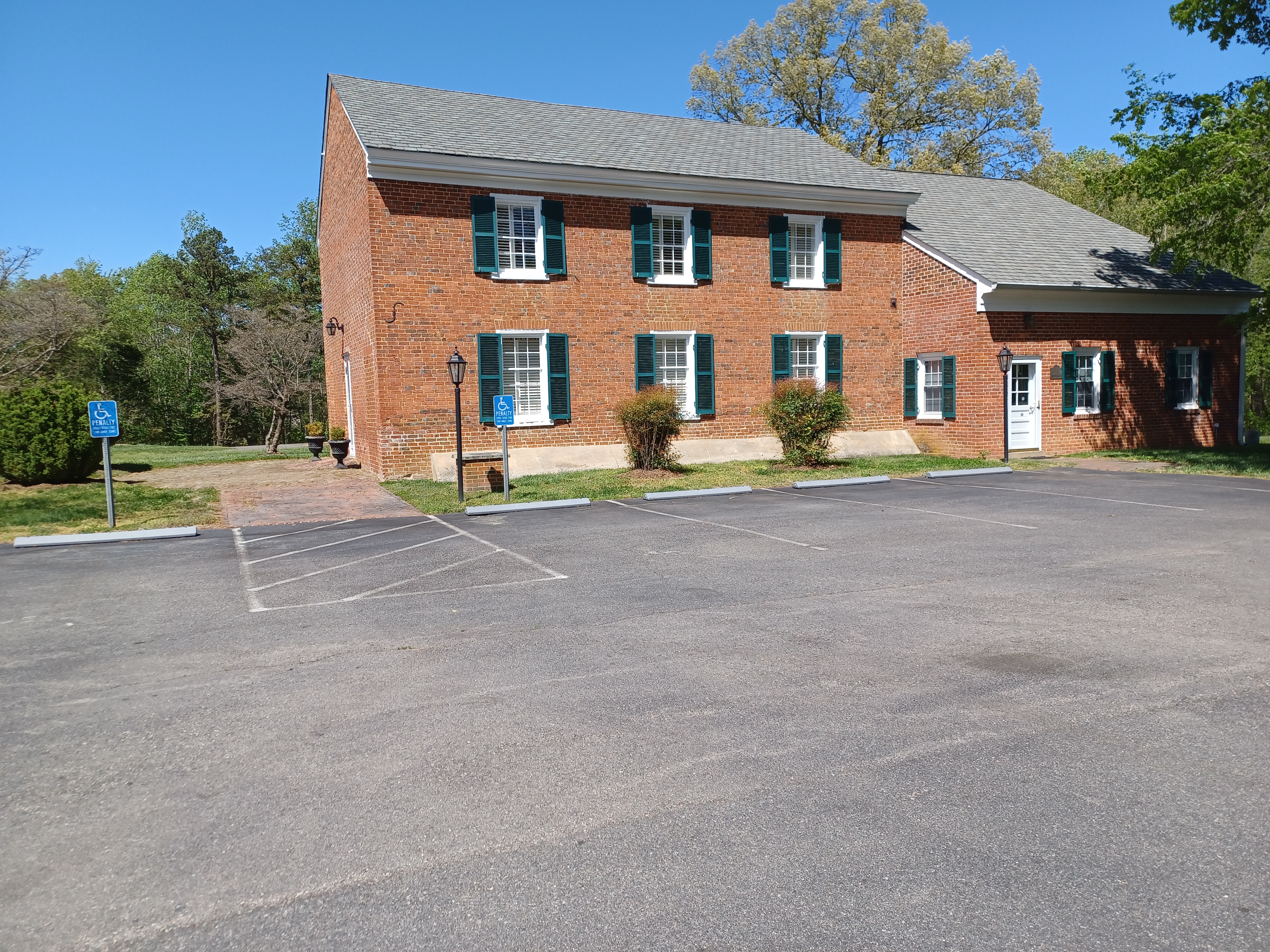
                                                    B'nai Tikvah-Beth Israel, near Sewell

It was late by that time, so I headed back to the motel, napped for a bit, and went back to the mall for a later dinner, after 6:30. I had a chicken gyro with vegetables and salad at a Greek stand, and either because the young woman found me charming or because it was late, and they had to close by 8, she gave me enormous portions of everything, more than I could eat.

Friday after breakfast,  I checked out and of the motel and headed across the Delaware River on the Walt Whitman Bridge, then through the south end of Philadelphia to Delaware County just to the south. I started in Chester, the largest city in the county (there are larger townships), the former county seat, and, I'm told, the poorest and most-crime-ridden city in Pennsylvania.

I started at Widener University, uphill and northwest of the center of Chester. I found Old Main  at the center of campus. The weather was warm and students, mostly White in a predominantly Black city, were out on campus. Downtown, I found Third Presbyterian Church from 1872, destroyed by an arson fire in 2020, and the restored 1724 Chester Courthouse in the center of town. The William Penn Landing Historic Marker from 1882 is in a sad-looking little park; the former Delaware National Bank Building is nearby. There is a commercial downtown block, but I didn't see much open. South along the river, I found a parking lot adjacent to a soccer stadium sponsored by Subaru. From there, I had a good view of the Delaware River and Commodore Barry Bridge, named for a Revolutionary War hero from Philadelphia, and opened in 1974. I could see the 1916 Philadelphia Electric Complex, now an office building at the south end of Chester.

               Old Main and Chemistry Building, Widener University, 1867and 1883, Chester
                                              Ruins of Third Presbyterian Church, 1872, Chester
                                                       1724 Delaware County Courthouse, Chester
                                   Former Delaware National Bank Building, 1882-1884, Chester
                                   Site of William Penn's Landing, 1682, monument 1882, Chester
                                   Commodore Barry Bridge over the Delaware River, opened 1974, Chester
                           Chester Waterside Station of Philadelphia Electric Company, now offices, 1916

It was still early, so I headed to Haverford Township, a historic area west of Philadelphia. I found Havertown Shopping Center with Cathy's Half-Price Books, my independent bookstore for this part of the trip. I didn't see anything in the used section that I wanted, and the new books were full price. I was having a burst of worrying about how much money I was spending, so I didn't buy anything. In the same shopping center is a bagel shop, where I had a bagel with cream cheese for lunch. There is also an Acme supermarket, where I bought an orange for dessert and a Cliff Bar for later, and ate the orange while sitting in my car.

Looking for historic places, some of which were hidden or just hard to find, I discovered The Federal School, a one-room schoolhouse from 1797, the Llanerch Public School, from 1913, and Nitre Hall, the home of the owner of a long-gone powder mill, built just after 1800, and a museum today. I wandered into Upper Darby Township and found Lower Swedish Cabin, possibly dating to the 1640s. I ended at Merion Golf Club, where the courses, from 1912 and 1914, are listed on the National Register of Historic Places. It was raining, so no one was out.
                                            Llanerch Public School, Haverford Township, 1931
                                          Lower Swedish Cabin, Upper Darby Township, 1640s
                                               Nitre Hall, just after 1800, Haverford Township
                                                   Merion Golf Club, Haverford Township
                                             Former Federal School, Haverford Township, 1797

My friend Mark Silber contacted me. He was someone I knew in Miami, and we had lost track of each other years ago, but thanks to the magic of Facebook, we reconnected. He has a restored late Victorian house in West Philadelphia, near the University of Pennsylvania, and agreed to meet me at my hotel for dinner.

The hotel is unusual for "The Usual Chain" because it is about seven stories tall, near the Delaware River south of the city and the airport. It looks somewhat Vegas-like, with fake pilasters by the elevator doors, and balconies in each room, which the hotel asks guests not to open. There is a restaurant, but there's no free breakfast.  It's also an event center. Mark called me, but I had turned down the volume on the phone, and didn't hear it. He arrived at the hotel and had the desk clerk call the room. We had a pleasant dinner at the hotel. I was glad to see him and catch up. 

                                                 with Mark Silber, Essington, Tinicum Township


Since it was Friday night, I looked for a synagogue to attend nearby. All I could find was a Reconstructionist synagogue near Media, the county seat, and they were having an online-only service. I decided I would rather tune in to Joe's service from Morgantown, so that's what I did.

Saturday morning, I walked a mile to a WAWA store, where I bought oatmeal and some fruit to take back to my room. It was cool, not cold, in the morning and the store was packed with people who looked like they were going to a job. After breakfast, I drove to Media, the county seat, where the parking meters were either for ten mutes or an hour and a half. I took the ten-minute option, and snapped a picture of the Media Armory, now a Trader Joe's store. Off the Main Street, full of trendy stores and little cafés, I found a historic house, now a B&B, and the county courthouse.

I headed south where there is a synagogue in a remodeled barn, next to a vineyard, across the main road from a development of upscale houses. It was after twelve, so I thought no one would be there, but there had been a meeting, so I first met a member who was security, things being how they are these days, then I met the woman who runs the facilities, the congregation president, and finally, the rabbi, with whom I have a common friend. 

It was past lunch time. I had passed a Panera on the way, and thought I would go there, but instead I pulled into a diner, that was crowded with people in my age group. I ordered a chicken parmigiana sandwich, and upgraded to sweet potato fries from regular fries. It was way too much food, but I somehow managed to eat all but the last few fries. I noted that all the staff looked alike, dark features, and with an accent I took to be Greek. I said "efaristo," meaning "thank you" in Greek when I paid the bill, but the cashier just said "That's okay." "I thought you all are Greek," I said. "Turkish," he replied. That was an "oops!" moment. Outside, someone had parked a new-looking 1957 Chevrolet station wagon. I couldn't find my keys, so I went back in, where they were on the table. I found the owner of the car and thanked him for making my day happy with his car.

It was not warm out, but sunny, so I drove to Ridley Creek State Park. I parked and walked a path through the park, which was crowded with people and their dogs. I found a historic bridge, and the visitor center, in a mansion mid-park, unfortunately closed for a private event. 

                                                               Media Armory, 1908
                                           Risley House, 1877, now a bed and breakfast, Media
                                                       Delaware County Courthouse, Media
                                                      Congregation Beth Israel of Media
                                                 1957 Chevrolet Bel Air station wagon
                                                     Historic bridge in Ridley Creek State Park
     Mansion in Ridley Creek State Park, about 1918, now the Visitor Center and an event center


I needed an Apple Store, or at least I thought I did, because I tripped over the computer cord in the hotel and broke the cord. There is a store in Ardmore, a community that can be in Delaware or Montgomery County or the city of Philadelphia. It's confusing. I went there the way with fewest turns and entered Philadelphia and moved into Montgomery County. The store was in what looked like an office complex turned into upscale retail, mobbed with upscale-looking people, including lots of young people, at stores and restaurants. The Apple store was crowded with people looking at the latest doo-dads, but I found someone to help me, and for $20, I scored a new wire. I could have used the cord from my phone, or bought something cheaper, but I found the area interesting.

I headed back to the hotel, which was hosting an event, meaning I had to park from the door. I crashed for more than an hour.

For dinner, I went out to a supermarket I found on Google Maps, bought a bagel,  single servings of Cheerios and cottage cheese and a pear and ate back at the room.

I was heading to my sister's home in Greenbelt, Maryland, outside Washington, so I thought I would get a fast breakfast at the hotel restaurant. After waiting twenty minutes, during which time I got a cup of tea, but no one had taken my order, I offered to pay for the tea. The cashier asked me about canceling my order. When I told her I hadn't ordered she said I didn't have to pay for the tea. The few would-be diners in the place were also frustrated at how horrible the service was.

I wasn't all that hungry, so I packed up and left. I bought oatmeal at the rest stop in Delaware, and continued on my trip. Google directions had me go through Baltimore's Harbor Tunnel to the Baltimore-Washington Parkway, but I decided to go straight through on I-95 from near the hotel, to near my sister's house. It was easy, except for my body freaking and needing to pee every twenty minutes. I'll spare readers the details. 

My sister was delighted with the earrings from the store in Pitman, New Jersey. We visited the National Arboretum Monday to see some trees in bloom and even a palm tree! We lunched at Silver Diner in Greenbelt, one of my favorite places.

         My sister Robin, modeling the earrings I bought in Pitman, New Jersey, at the National Arboretum        in Washington, D.C.


I had an uneventful trip home Tuesday, stopping for lunch and gas at a Sheetz store outside Cumberland. 

There are 96 places on the National Register of Historic Places in Delaware County. I barely touched the surface. This was a longer trip than most of the ones I do. I love being in the Philadelphia area. People are friendly, the population is diverse and there's good scenery and a variety of places. Much of the area is like the suburbs of Baltimore, not that far away. The difference is how many places are left from the 18th and 19th century.

Monday, March 6, 2023

Purim 5783

 Tonight (March 6, 2023) is the beginning of Purim, a raucous holiday celebrating the victory of the Jews of Persia over Haman, an evil minister in the king's court who sought to annihilate the Jews. There may not be a lot of history to the story, but like most Bible stories, there are lessons for today. 5783 is the year on the Jewish calendar.

In the story, King Ahasuerus banishes his queen, Vashti, because she refused to dance for his friends at a drunken banquet. When I was a child, Vashti was evil, but today, she is a feminist icon. To replace her, the king holds a beauty contest, and chooses Esther, ward of her uncle, Mordechai, and a Jew. All of this is highly unlikely, and the names Esther and Mordechai are too close for comfort to Persian Goddess and God, Astarte and Marduk. Still, it's a holiday for fun,  near Mardi Gras in spirit and time of year.

My mother died on  Purim morning twenty years ago. That year, Purim was March 18. She was in hospice care in suburban Baltimore. I had been in town for her 75th birthday in February, and I suffered a heart attack at her house on February 9. The next day, her birthday, she spent much of the day visiting me in cardiac intensive care at Sinai Hospital in Baltimore. I  was supposed to go back to Los Angeles on the 11th, but I was delayed until the 22nd. I had to allow the airline to look at my medical records, because I had a special "short-term" fare.

I didn't expect, ever, to live this long, and the mystical side of me thinks that my Mom has somehow worked things from the next world to keep me going. I have lots of health problems, but my heart is still ticking along, better than the hearts of most men my age.

This August, I will be the age my mom was when she was diagnosed with the cancer that took her life. She lived fifteen months after that, which would make me that age in December 2024. Not that far away.

I told students last year during my campaign for U.S. Congress that this campaign was my "culmination project," something students work on to graduate. I meant at the time that I would be ready to leave this world after that. I've been wrong about predicting my imminent demise before, so maybe I'll just have to reinvent myself.

My husband, Rabbi Joe has been talking about moving away from here. He said "We have nothing left to prove here." That's true, and the current political climate in West Virginia makes me think it might be wise to leave. Joe, who was born in Buffalo, only wants live somewhere warm where we know people. Still, I've made friends throughout West Virginia in my run for Congress, and I feel some obligation to those people, and to the Democratic state delegates from Morgantown and other activists who are working to change the culture here. 

Seventy-three has been hard on me physically and emotionally, and I've had to step back from political and social events just from a lack of strength. I'm doing a little better now. I don't expect to be where I was twenty years ago, endurance-wise.

I have started back at the gym, and on days when I can, I run a bit in the neighborhood. Some days I can't do it. I'd like to get back on my bike, which I haven't been on since May when I had an accident and injured my leg. I'm also back to writing letters to the editor and resuming my travels to nearby cities.

We're supposed to go to Chabad, the Orthodox group in town, for dinner in the late afternoon tomorrow, and we had one of Joe's parody plays last Saturday night, where he rewrites some old Broadway musical to (almost) fit the story of Purim. This year it was a parody of The Pajama Game. It's both brilliant and crazy, but always fun. And we visited a nursing home today to sing Purim songs, visit with the people there and have hamantaschen, the triangular cookies associated with Purim. I used to dread seeing people in such bad shape, but now I enjoy talking to them, and don't see much difference between them and me. 

In the Purim story, we are saved from the evil Haman by Esther and Mordechai, and we celebrate our victory over our enemies. But in The Washington Post this past Sunday, there was a review of a book about diaries people kept in The Netherlands during World War II, most famously Anne Frank, but also diaries kept by Nazi leaders and other regular citizens. There is a picture of Jews in Amsterdam, the men in suits and the women in dresses, being led to a central point in Amsterdam, where they will be shipped to concentration camps and murdered. The people in the picture look shockingly modern, and this was only six years before I was born. We don't always win out over our enemies. 

In another part of the paper was an article about The Proud Boys, who are being investigated by the Federal Courts for organizing the January 6 events, probably egged on by the former President. One of the star witnesses has a last name that also belongs to cousins from the Italian side of my family. I looked up his picture to see if he could possibly be related, and sure enough, he's short, dark and bald-headed. If he is in that family, I wonder if his White supremacist friends know he had a Jewish great-grandmother. 

I'm just ranting now, so I'll stop. I wish everyone a happy and festive Purim, a reminder that we have to fight for our right to be who we really are, and confront the bigots who want to erase us.

Saturday, February 25, 2023

Grant and Gilmer Counties, West Virginia

                    Gormania United Methodist Church (formerly Presbyterian) 1888, Gormania
                            Old Grant County Courthouse, Petersburg, 1878-9 with additions 1909
                              Hermitage Inn, Petersburg,1840, third story and porches added 1888. 
                                              Victorian era house, Virginia Avenue, Petersburg
                                              Looking east along the railroad tracks, Petersburg

 I'm trying to catch up. At one county per month, I would have visited 128 counties by now. I got way behind with the pandemic and my campaign for Congress last year, so I'm trying to catch up.

In Mr. Ames' class in sixth grade at Campfield Elementary School in Baltimore County, Maryland, we learned that one reason the borders of Maryland are so strange is because the border runs along the North Branch of the Potomac River, instead of the South Branch. Petersburg, the county seat of Gilmer County is on the north shore of the South Branch, south of Cumberland and Oakland in Western Maryland. It should have been in Maryland. Grant County is the most Republican in West Virginia, which is saying something. Still, I got 607 votes there for Congress last year, the same number as Joe Biden got against the then-incumbent President in 2020.

It's technically, according to Google Maps, 101 miles from Morgantown to Petersburg. I added some miles to get the rest stop on I-68 as one enters Maryland, and went through downtown Oakland, because there is a Sheetz convenience store. I needed both restrooms, so it was worth it.

Petersburg is a pretty town, with some old homes. I had lunch at a former doctor's office, now a small trendy café, and dinner at a Chinese buffet restaurant, where I had plenty to eat. The town has several restaurants, a Sheetz, a small supermarket. The weather was much too warm for February, so I walked all of downtown with a map from the café. It took me about an hour. 

The closest branch of "The Usual Chain" was forty miles away in Virginia, so I stayed at The Hermitage Inn, a newish motel behind a 19th century hotel. Joe pointed out the joke to me when I made the reservation from home. The Hermitage is the art museum in St. Petersburg in Russia. Get it?

I didn't interact with a lot of people, but I didn't get the looks I get in some places, and I only saw one Confederate flag from a person unclear on the history of West Virginia.  I'm only putting up a few pics; the first is a church in Germania on the National Register of Historic Places. Wikipedia doesn't have a pic of this church, so I will share it with them. I also am posting a pic of the old Hermitage Inn and the former Courthouse. 

I spoke to the young women at the desk in the evening and the following morning. The evening woman thought that it always snows in Morgantown. I corrected that and she said "Maybe it just rains a lot and it's always cloudy." There is a lot of that, I had to admit. The woman in the morning told me that she had been to Ruby Memorial Hospital in Morgantown for a month. She was pregnant two years ago, when she came down with COVID and they sent her to Morgantown to the hospital. She shared all the gory details and showed me pictures of her wired up. She said she almost died, and that of the five pregnant women with COVID when she was there, three of them did die. She showed me a picture of her healthy toddler.

I drove out west in the evening to find a historic cabin. It's possible that I saw it, but I wasn't sure it was the right one. West of town on Route 28, there are resorts with rustic cabins along the flat land on the river.  I guess people go out there for peace and quiet and to fish in the Potomac. 

  That was Wednesday. I left Thursday morning to drive 129 miles to Glenville, a tiny college town, the seat of Gilmer County, smack in the middle of the state of West Virginia. It's also pretty. Driving there on State Road 28 involves driving past Dolly Sods Wilderness in Monongahela National Forest, an ecosystem of bogs and heaths, more typical of Southern Canada than the United States, according to the Petersburg tourist brochure. Seneca Rocks are barren mountain peaks, the heart of Appalachia. There are hikes and mountain bike trails. I don't feel healthy enough to do that kind of hiking, but the views from the car were spectacular. 

I stayed at a local hotel, Glenville Inn, located on Route 5 between Interstate 79 and the middle of Glenville. I had lunch at a little Italian restaurant in the middle of town, and saved my once-per-trip Subway experience for dinner. 

While Petersburg is on a branch of the Potomac, Glenville is over the mountains on Little Kanwha River, so it flows into the Ohio and Mississippi Rivers. 

              Stouts Mill Bridge over Little Kanawha River, Stouts Mill, 1897 (not in use)
                  Gilmer County Courthouse, 1922-24, seen from City Square, Glenville
                                     Former Little Kanawha Valley Bank, 1901, Glenville
   John Arbuckle House, 1901, Glenville, now the Alumni Center from Glenville State University
                             View of Glenville State University, founded 1872, 1500 students currently enrolled