Saturday, April 28, 2018

Evan's Wedding / Key West

Arriving at Key West airport

A performer on the pier before sunset

Sunset in Key West

Dusk from the pier

Near our hotel with the lighthouse

Hemingway House

Robin and Joe at Hemingway House Friday. It was cool for there.

The Butterfly Museum

Self-portrait with a mural near our hotel

March For Our Lives- Key West

The rally at the end of the March For Our Lives

March For Our Lives- somewhat manipulated photo

At the Botanical Garden

A memorial at The African Cemetery at Higgs Beach. Africans from captured slave ships, after importing slaves was banned, were brought to Key West, before being resettled in Liberia. Many of them died and were buried near the beach.

The Key West AIDS Memorial

Key West City Hall, with a rainbow flag flying

Eduardo Gato House. Gato was a Cuban immigrant who got rich in the cigar business, 1890s

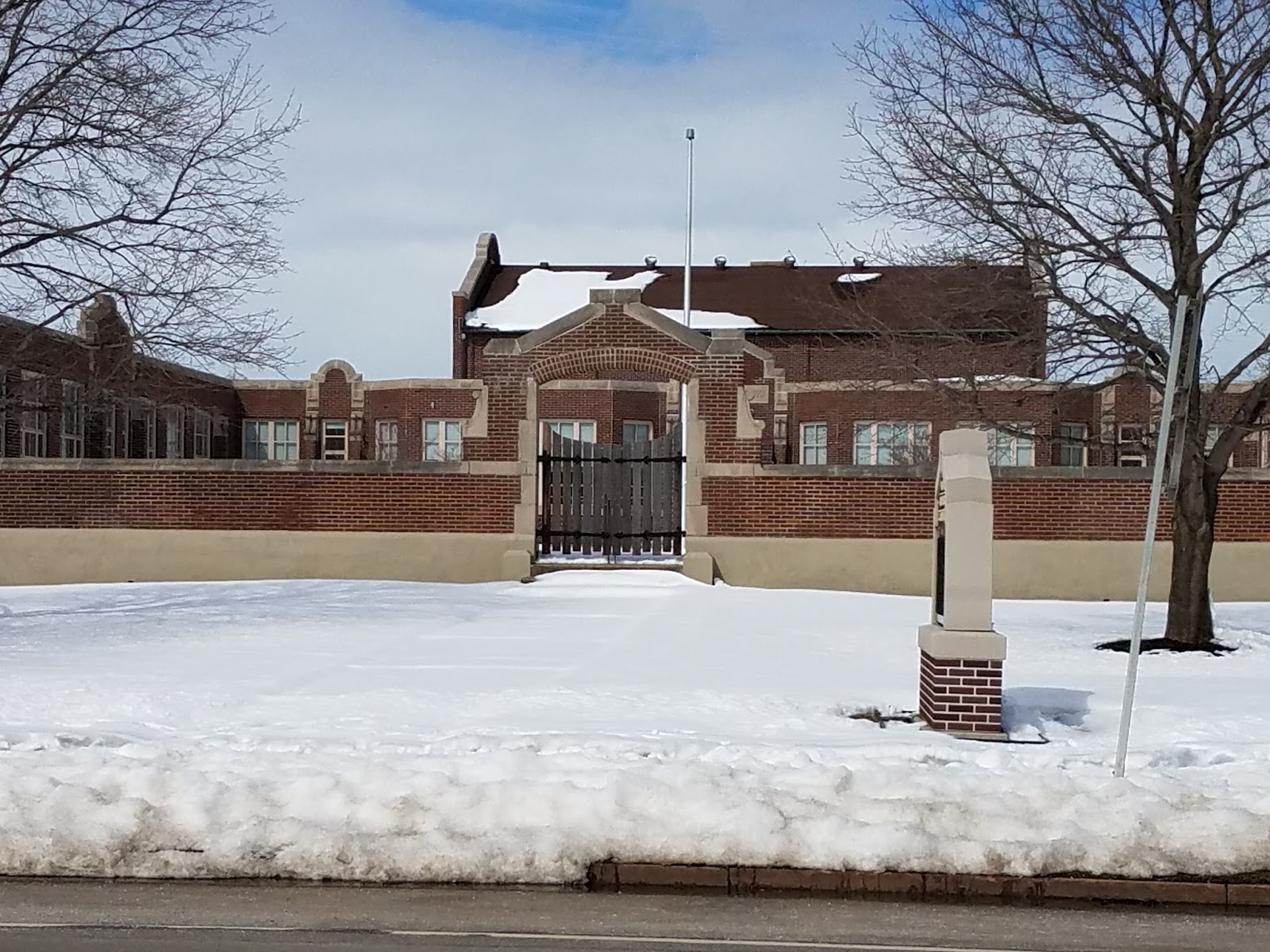
The Armory, 1903

Evan and Kellie at the wedding

Right to left, my sister Robin, cousins Valerie and Marjorie

L to R, cousins Cindy, Terry, Jim, Sue

U.S. Coast Guard Cutter Samuel Ingham, 1934, Monday morning
Key West is an island in the Caribbean between Everglades National Park in Florida and the coast of Cuba. It's 120 miles southwest of Miami along the southern end of US Route 1, through a whole chain of islands. Sometime in the 1980s, the 8-Mile Bridge, a former railroad bridge used for cars, and narrow enough that driving it while passing another car coming the other way made you catch your breath and fear for your life, was replaced with a modern highway. There used to be a boat from Flamingo, at the end of Everglades Park, and some kind of plane from some little town on the west coast of Florida.

My friend Alan used to fly from Baltimore to Miami, where I lived from 1978 to 1984, for Veteran's Day, before "season," and we would drive down to Key West and stay in a gay guest house. One year there were four gay guest houses, another year, there were sixteen. In my mind we went all six Novembers I was in Miami, but I know we didn't go in 1983, my last year in Florida.

Joe and I were there the last weekend in March for my nephew Evan's wedding. Evan and Kellie asked Joe to perform the ceremony, and Evan's mother, my sister Robin, paid for our plane fare and hotel. I hadn't been in Key West in probably thirty-six years. We drove from Morgantown to Pittsburgh on Thursday the 23rd, flew to Atlanta, then Key West. That all went smoothly. Robin's flight from Washington was canceled because of a snowstorm, but she managed to get to Key West, somehow, Thursday night. Joe and I saw the sunset with most of the tourists on the island before Robin arrived. We had dinner later that night with Robin and Susie, Robin's traveling companion, and the mother of Robert, one of Evan's closest friends, outdoors in relatively cool weather.
L to R: Me, Robin, Joe, Susie


We stayed at Lighthouse Court, a guest house made up of little cottages around a pool and outdoor bar. There was a booklet in the office with the history of the place. It had been a gay venue, but was now a "family" hotel. The cab driver and the clerks at the hotel, to our surprise, were Russian-born. Less surprising was that the maids and janitors were Jamaican, and once they found out we were gay, the maids flirted with me. The original Key Westers, called "Conchs" (pronounced "Conks") were Black people from The Bahamas. There are still some of them there, but the island is gentrifying, and even small houses have become expensive to buy, and can rent for  five or six thousand monthly in the winter.

Key West is completely different now from the early 1980s. There are flights from Miami, Ft. Lauderdale, Tampa and Atlanta, a speedy boat from Naples (a much larger city than it was c. 1980) and the road from Miami has been rebuilt.  There was still a sign in the airport for a "clothing optional " gay resort (probably where Alan and I stayed), and there is an intersection in the middle of town with faded rainbow crosswalks. Nowadays, Jimmy Buffett is the local hero; there are lots of bars and restaurants, and although I don't drink, we had delicious food everywhere we ate. The streets were jammed with tourists, mostly families,which was not true in my previous visits.


The wedding was at five Sunday at Ernest Hemingway's House, now a museum. We toured there Friday, and also visited the Butterfly Museum, which was beautiful. Kellie's parents and grandparents came in Friday, and Robin took us all out to dinner Friday night.

Standing: Joe, Linda (Kellie's Mom), me, Robin. Seated: Mike (Kellie's father) and Kellie's grandparents

Saturday was the "March For Life" in Washington, organized by students from Marjory Stoneman Douglas High School in Parkland, Florida, in response to the murders of their fellow students by a gunman on February 14. As a supporter of a ban on assault-type weapons, I felt guilty vacationing when I could be part of this mass movement. We had brunch with Evan and Kellie and their friends and our families, then joined Key West's "March For Life," several hundred people marching from one end of Duval Street, the main street of town, to the other. We dined Saturday with Robin and our cousins Marjorie and Valerie, daughters of my mother's late brother.

L to R: me, Joe, Robin,  Valerie and Marjorie


We were free Sunday early, so I looked up five places on the National Register, and the town's Reform synagogue, which we had glimpsed on the cab ride from the airport to the hotel. We found the synagogue and an old-fashioned luxury hotel, a beach and a traditional residential neighborhood. Nearby was a Civil War-era fort, largely in ruins with many of the bricks carried off for other building projects. The Union controlled Key West during the war, we learned, and there is now a botanical garden there. The guide told us that there had been a broad canopy of trees, which were blown away by Hurricane Irma last year. Near the fort, we also found a memorial to the African Cemetery, where people rescued from slave ships and brought to Key West, who were ill and died, were buried in unmarked graves. Next to that is the AIDS Memorial. Many names were inscribed on marble slabs on the ground, not just locals, but people who visited Key West in its gay heyday. We recognized some of the names, like Michael Bennett, the choreographer behind "A Chorus Line." The beginning of the AIDS crisis helps explain the end of Key West as a wide-open gay resort.

I don't remember what I did there in the old days, but I know Alan and I didn't go in November of 1983, because we wanted to take ourselves out of the risk pool. I was living in Los Angeles by November of 1984. Seeing that memorial reminded me, and Joe too, of our many friends we lost to AIDS.

We walked quite a bit that morning, but came back to the hotel in time for lunch nearby and a nap. I took a dip in the heated pool at the hotel.

The wedding was beautiful. I've watched "Say Yes To The Dress" with my sister at her house, and when Kellie walked down the aisle in the perfect dress for her, I knew it would be a great wedding. Joe was in full Rabbi mode, and had everyone laughing and Evan and Kellie's friends asking" Where did you find this rabbi?" The weather was sunny and warm, and still warm after the sun went down. I hadn't seen my paternal cousins, Susan and Terry, in many years, so I was glad they were able to come with their spouses and meet Joe. Evan has had many of the same friends since early childhood, like Susie's son Robert, and his two sisters, and Brian, a neighbor growing up. Brian's parents were also there. Kellie's mom Linda, young-looking and vivacious, was there with Kellie's dad, Mike, and I met Kellie's two sisters and brother, and immediately felt close to them. Kellie's grandma Nancy attended with her husband, and we got along well. I hadn't seen Evan's dad, Jimmy, in a while, but we hung out in our hotel room before the wedding and caught up. I thought about my parents, Evan's grandparents, and how they would have loved to be there, as well as Jimmy's parents, Bill and Betty, who loved Evan dearly. All four of Evan's grandparents lived in Florida at one time.

The wedding was over at 10, per the rules of Hemingway House, and although Mr. and Mrs. Olson invited us out for drinks with their crew later, we declined, and were fast asleep by 11.

Joe and I had a little time Monday before our flight, so we walked a bit more, and saw more sites before heading back to the airport.

We loved being in Key West. March weather had been dreadful in Morgantown, and having lived in Miami for six years, and having visited Key West, I remembered how much I loved the feel of the place. Joe had never been to Key West, and he was charmed by it. Most of all, I was delighted to see my nephew, who I met at his bris when he was a week old, marry the love of his life, accompanied by family and his big friends who used to be little kids. The icing on the wedding cake was to have my own Joe perform the ceremony, as clergy and part of our family.

Update: Robin corrected me on who was at which dinner, and had pics, which I posted in the text, to prove it!


Saturday, March 10, 2018

Chautauqua County, New York


This was different. On most of my monthly trips to a new county, and this was the sixty-ninth, I've picked the week when the weather was going to be at its best. Now that I'm on City Council in Morgantown, I don't have that luxury. Also, Joe and I are going to Key West at the end of the month to my nephew's wedding, and I thought it would be good to leave a week to be back in Morgantown before heading off again. The forecast for Chautauqua County, in far western New York on Lake Erie, the United States' border with Canada, was for snow. A lot of snow. Still, the roads are all Interstate and there are no mountains to cross, unlike driving to Virginia, for instance, so I figured it wouldn't be hard to go 230 or so miles. And generally, it wasn't.

My first stop was a rest stop on Chautauqua Lake near Mayville, the village that is the county seat. I  met David and Joanne, an older couple staffing the tourist center there, and they told me about the Luci and Desi Museum and Chautauqua Institution, closed for the winter, but a gathering place for intellectuals. Lucille Ball is from Jamestown, the largest city in the county. I told them I look for synagogues, and they told me that Chautauqua, when it's open, has two Jewish centers, and they found a synagogue online in Dunkirk, the second largest city, on Lake Erie, with twelve members. I had found a Reform synagogue in Jamestown with thirty members. There is also a mall, a Wegman's (but no Whole Foods) and forty-nine places on The National Register. So I had enough to do.

View of Lake Chautauqua from the rest stop on I-86, which is also Old Route 17, Wednesday, afternoon

My motel was located just outside the city limits of Jamestown. I got to town about three and went downtown to check out what was there.


The Wellman Building, Jamestown, 1897


Downtown Commercial Historic District, Jamestown. This is the Jamestown Hotel, from 1924
Main St., Route 60, Jamestown

Luci and Desi Museum, Jamestown


I drove back to the motel and crashed for at least an hour. Leafing through the motel's notebook, I found an ad for a Chinese buffet, located just south of the Erie Railroad overpass on Main St. Just a block south of downtown, in what looks like a flood plain, there are newish stores: a chain restaurant, drug store, and a medical walk-in office. The food at the Chinese place was good, but both the hot and cold foods were room temperature, except the hot tea and the cold ice cream. It was snowing when I left the restaurant.

I stayed up arranging my day for Thursday. The National Weather Service posted a "Winter Weather Warning" for Thursday, starting at three P.M. and extending to Saturday evening. I thought about going home the next morning, but decided to stick it out.

Thursday was cold, ranging from 21 to 31 F. and there were snow squalls alternating with bright sunshine most of the day. I had six places on The National Register to find in Jamestown, plus the synagogue, before heading off to the rest of the county. I skipped my alternate day water pill. I knew it would be too hard to have to pee every twenty minutes.
Euclid Avenue School, Jamestown, 1911, enlarged 1920

Lakeview Avenue Historic District, mostly 1890s

Jamestown National Guard Armory, 1932

My search for Jamestown's synagogue was fruitless. The building, behind the armory, is now a church. It's possible that the synagogue still meets elsewhere. The future of Jewish life in small towns is not good.
Erie Railroad Station, Jamestown, 1931. Wikipedia says the last passenger train was in 1970. It is used as a bus hub and, according to a sign outside, will be renovated as a performing arts center.

Partridge-Sheldon House, Jamestown, 1850-67, enlarged 1880. Porter Sheldon was a US Representative after the Civil War

A view of downtown Jamestown from the south, near the Partridge-Sheldon House

Governor Reuben Fenton Mansion (1863) now Fenton History Center, Jamestown
It's 26.5 miles up NY Route 60 from Jamestown, at the south end of Lake Chautauqua, to Fredonia, near Lake Erie. The Commons is a two-square block park along Main Street (US 20) in the middle of town. North of there is a campus of the State University of New York. Fredonia is one of the more prosperous looking towns in the area.
Fredonia Commons, Fredonia

Fredonia Post Office, on the Commons, 1935-36, a Works Progress Administration Project

Fredonia Town Hall and Opera House and the United Methodist Church, Fredonia Commons

On campus at SUNY (State University of New York at Fredonia)
Dunkirk, the second-largest town in Chautauqua County, is just up the road from Fredonia on the border of Lake Erie. Much of the lake is inaccessible, with industrial uses, businesses and parking lots. There is a city park on the lake. I used to work at Social Security in Miami with a young man of Polish heritage who was from Dunkirk. I saw some buildings with words in Polish  and a polish community center in Dunkirk.
Temple Beth-El , Washington St., Dunkirk. They have a webpage on meetup.com, not updated since at least last summer, that shows eleven members

School Number 7, Dunkirk, probably 1920
Coming back down Route 5 along the lake I spotted a combined Tim Horton's and Cold Stone Creamery. Joe and I breakfasted at Tim Horton's in French-speaking Canada, and so I was surprised that the young woman at the register spoke English and said "What can I get for you, Honey." I'm not used to being called "Honey." I had a gooey chicken fajita wrap, with bad fries in a cup (edible drowned in ketchup) and a Diet Coke. I hear that Diet Coke rots your brain, but it goes well with fast food.

Point Gratiot Lighthouse. As you can see, the grounds were closed. This is the office with the lighthouse, still in use, behind it, 1875, on Lake Erie in Dunkirk.

Lake Erie from Point Gratiot Park in Dunkirk
The road into Lake Erie State Park, Brocton, with the bathhouse on the right

Brocton "Welcome" Arch, 1913
It started to snow on the way from Brocton to Westfield, adjacent towns along Lake Erie.
Barcelona Lighthouse and keeper's cottage, 1829, Westfield, now owned by New York State
Coming back to the center of Westfield, which is along U.S. 20, from Barcelona Lighthouse, the snow was coming down "fast and furious." I parked behind Main St. and ducked into the café pictured here with the "open" flag. I had a cannoli and herbal tea. I didn't realize they closed at two. I got there at five of. The snow stopped for awhile, or at least slowed down enough for me to walk around. Westfield has more National Register listings than anyplace else in Chautauqua County. It was once called "Portland" and was an early port and grape-growing region. If it had not already been so late, and the weather threatening, I might have explored more of the town.
E.Main St. Historic District, Westfield

One-time headquarters of Welch's, Westfield. Lake Erie is a major grape-growing area

Town Square, Westfield, part of the French Portage Road Historical District

an early 20th Century block on East Main St., in Westfield

The McClurg Museum, an 1818 mansion, Home of the Chautauqua Historical Society, Westfield
I headed south east from Westfield back in the direction of Jamestown, to Mayville, a village, and the county seat. By this time, it was 3 P.M. and the promised snowstorm showed up.
Chautauqua County Courthouse, 1907, Mayville

Sign bragging about how much snow they get, across the street from the Courthouse, Mayville

I thought I would check out the Chautauqua Community, a resort that has concerts and lectures throughout the summer. It is just south of Mayville and has many historic structures. Although the road by there is along Lake Chautauqua, the snow was coming down so hard that it was impossible to get a clear view of the lake. I passed it by on the way to Lakeview, the western suburb of Jamestown, where there is a traditional enclosed mall. I stopped in to see what was there, and to get out of the weather. They have a Bon-Ton (same company as Elder-Beerman in Morgantown), Penny's and Sear's. There an Office Depot with an outside entrance, and some restaurants that can be entered from inside or outside the mall. Many storefronts in the mall are empty. I stopped in FYE, where I (still) buy CDs in Morgantown, and I bought the new Grammy CD, a collection of songs nominated for Grammys. This gives me an opportunity to see what the latest (last year) music is, and I usually upload it to my antique IPod shuffle to listen at the gym.

I noted the location of Wegman's near the mall and went back to my motel to nap for an hour. I went back out to Wegman's for dinner, where it is now $9.99 a pound for the food bar. I spent $!5 on greens, broccoli, a little piece of salmon, and fruit, trying to eat healthier than I did for lunch. I was back in the room early to catch up on email and social media. There was a party in the next room, which kept me up a bit. I tried to watch some of MSNBC and CNN, thinking I would get smart commentary, but on one of them was an interview with a steelworker and his father, both inarticulate, praising the President's tariffs on imported steel. There were also commercials for medication and cars. I confirmed for myself why I don't watch television at home.

I was out before nine Friday morning in near white-out conditions, drove back to the courthouse in Mayville, then to Morgantown. The weather cleared up at the Pennsylvania line near Erie, and there was less and less snow on the ground as I headed south. I was in Frankin Park, at the north end of Allegheny County, not far from Pittsburgh just past noon. I know there is an Eat 'n' Park there, and my friend Matthew, who I met in New Orleans in 1973, lives nearby. I called him, and since he is unemployed, he came and met me for lunch. It was good to see him again. Schools in Monongalia were closed because of snow Friday. It didn't seem so bad when I got there around three in the afternoon.

Like most of the smaller places I visit, it seems the best days of the area are in the past. The little old towns are pretty, and some have upscale stores, but most don't. Chautauqua Institute is famous, and I know people from all over go there for a week or so in the summer. I'm sure it's beautiful outdoors by the lake in the summer. I perversely enjoyed navigating around in the snow. Go figure!

Sunday, March 4, 2018

More Movie Awards

The people who host the big movie awards show tonight are fussy about who uses their name, so I won't. You know who I mean.

This year, I saw all the Best Picture  nominees, either through screeners sent by S.A.G. for their awards, because I maintain a membership with them, or, sometimes, in a theater. They are all good movies.

"Call Me By Your Name" is an old-fashioned romance, slow and beautiful, only the romance is between a teenage young man and a somewhat older grad student. It's really a Merchant-Ivory production, from the people who made "Howard's End" and "Remains of the Day," only Merchant died some years ago, so the script is by James Ivory, turning ninety this year in June. I especially like Timothée Chalamet, who is twenty-two, playing the seventeen-year old who falls in love with another man. To be that young, and know yourself well enough to play that character, onscreen through most of the movie, and frequently undressed, takes a level of acting expertise and unselfconsciousness I don't think many actors can handle. I would go for Chalamet for Best Actor, for which he has been nominated.

"Darkest Hour" is about Winston Churchill's first month in office as Britain is about to be attacked by Nazi Germany. It ends with the evacuation of Dunkirk, which is what the movie "Dunkirk" is about. Both movies are great history, and Gary Oldman's nominated performance as Churchill is amazing. "Darkest Hour" is meticulous in the details, looks beautiful and rouses one to a patriotism one doesn't see anymore, not anywhere. "Dunkirk" does the same, but is a more modern movie, filled with newer effects, and focused on several individuals, none of whom have what you would call a "star turn." Given a choice of one of the two, I would take "Dunkirk" because the patriotism is not people at home cheering on Churchill by pledging to fight, but follows the actual people doing the fighting, who survive with courage and great luck. I found that more moving.

"Get Out" is a freak show, scary and funny and original. Daniel Kaluuya stands out, and was nominated for Best Actor, but the supporting cast was also great. This movie gets points for being a sock in the nose to racists. Jordan Peele, who is African-American, was nominated for Best Director.

"Lady Bird" has a great costar- Sacramento. It's about a teen girl (Saoirse Ronan) and her mother (Laurie Metcalf), and the teen's desire to leave Sacramento, where she has lived all her life. She takes drugs, has sex with a jerk of a guy (Timothée Chalament again), dyes her hair blue and fights with her mother. I saw it in Memphis with Joe's cousins. The 17-year old girl, whose grandmother hosts Thanksgiving, raved about it. She is smart and, supposedly a "good girl" so I wondered about her identifying with the main character. This is one of the few movies that passes the "Bechdel Test"  where two women relate to each other for more than five minutes without it being about a man. Greta Gerwig was the rare female nominated for Best Director, and Ronan and Metcalf are up for Best Actress and Best Supporting Actress respectively. I'm familiar with Sacramento, and it was really filmed there and looks as charming as it is. I wish there were an award for "Best Location."

"Phantom Thread" was the most annoying movie of the year, at least that I saw. Yes, it looks great, the clothes designed by the lead character (Daniel Day-Lewis) are interesting, if not beautiful, the sets, the score by a string orchestra, all brilliant. But another story about a pretty twenty-something girl in love with a crotchety sixty-year old man? Please. I didn't find any of the characters appealing, and yes, Daniel Day-Lewis is a great actor, but this was so stylized as to be off-putting, and can we talk? No way was that character straight. In addition to Best Picture, Day-Lewis is nominated for Best Actor and Paul Thomas Anderson for Director. I looked at my watch too many times during this movie. We should be gripped, if not entertained, instead of being exhausted and exasperated. End of sermon.

What could be bad about "The Post?" Steven Spielberg directing Meryl Streep and Tom Hanks. It's perfect- for 1978. My sister saw it in Greenbelt, Maryland. She said everyone cheered at the climactic scene. The audience in Greenbelt skews older and well-educated. The movie was about The Pentagon Papers. "Why were they cheering?" my sister asked. "They were all in Washington when this happened. They couldn't have been surprised." Streep was nominated for Best Actress, and of course, she was great. I liked her 1970s outfits, too. I identified her with Hillary Clinton, and Nixon with the current President. I think I was supposed to.

"The Shape of Water" was the most beautiful film this year, romantic and full of fantasy. Guillermo del Toro was nominated for Best Director, another potential slap to the bigots, as he is Mexican. I did feel that he didn't really "get" the early 1960s in America, not having been alive then and not being American. I was also annoyed that we were supposed to be in Baltimore and nothing looked like Baltimore (the movie was filmed in Toronto, parts of which look like Baltimore, but not where this was filmed), and the beginning of the rainy season was part of the plot, but the mid-Atlantic does not have a "rainy season." The 1962 cars were beautiful, and Sally Hawkins as a young woman who works as a janitor and is mute, was terrific, without speaking, quite a trick. Octavia Spencer was nominated for Supporting Actress, but didn't have enough to do,  and Richard Jenkins, nominated for Supporting Actor, was let down by the script. I would have gone for Michael Shannon for Supporting Actor, had he been nominated.

I watched "Three Billboards Outside Ebbing, Missouri" on a S.A.G. screener with Joe. He loved it. I didn't. Not subtle, and "Fuck" seemed to be every other word. For the S.A.G. awards, I voted for Sam Rockwell for Best Supporting Actor for his over-the-top performance, but on thinking about it, I like Woody Harrelson (also nominated) for embodying the warmth and compassion of his character. He was the only one in the movie not screaming all the time. Frances McDormand was nominated for Best Actress, and she was terrific.

I also saw "I, Tonya," just last night, because Margot Robbie was nominated for Best Actress and Allison Janney for Best Supporting Actress. That was an entertaining, different, roller coaster ride of  a movie. Robbie, who can skate (there were doubles for some of the scenes) was all in, if too old, and Janney was blood-curdling. Clever of Robbie to produce this movie and make sure it got done. I also liked Sebastian Stan as Tonya's husband Jeff, handsome, charming and a total dick.

I watched "The Florida Project" and "Mudbound" on screeners. I didn't think Willem Dafoe, nominated for Supporting Actor, had enough to do in "The Florida Project." I might have voted for Bria Vinaite, as the mother in this movie, for Best Actress. Apparently, she had never acted before. I was moved by "Mudbound." Any of the actors in that could have been nominated, but Mary J. Blige was, for Supporting Actress, probably because she was far away from how we know her. I would vote for her. I missed Denzel Washington in "Roman J. Israel, Esq." and Christopher Plummer in "All The Money In The World." Other than those two, I saw all the Picture, Director, Actor, Actress, Supporting Actor and Supporting Actress nominees.

Were I eligible to vote, I would vote "Dunkirk" Best Picture, Timothée Chalamet, Best Actor, Margot Robbie, Best Actress, Woody Harrelson, Best Supporting Actor, and Mary J. Blige, Best Supporting Actress. For Director, I would go for Guillermo del Toro, without being upset if anyone else won unless it was Paul Thomas Anderson.

The awards show is on tonight, soon. I won't be watching it.